
2026-09-12 ·
Rodent Control For Thiells Homes With Crawl Spaces
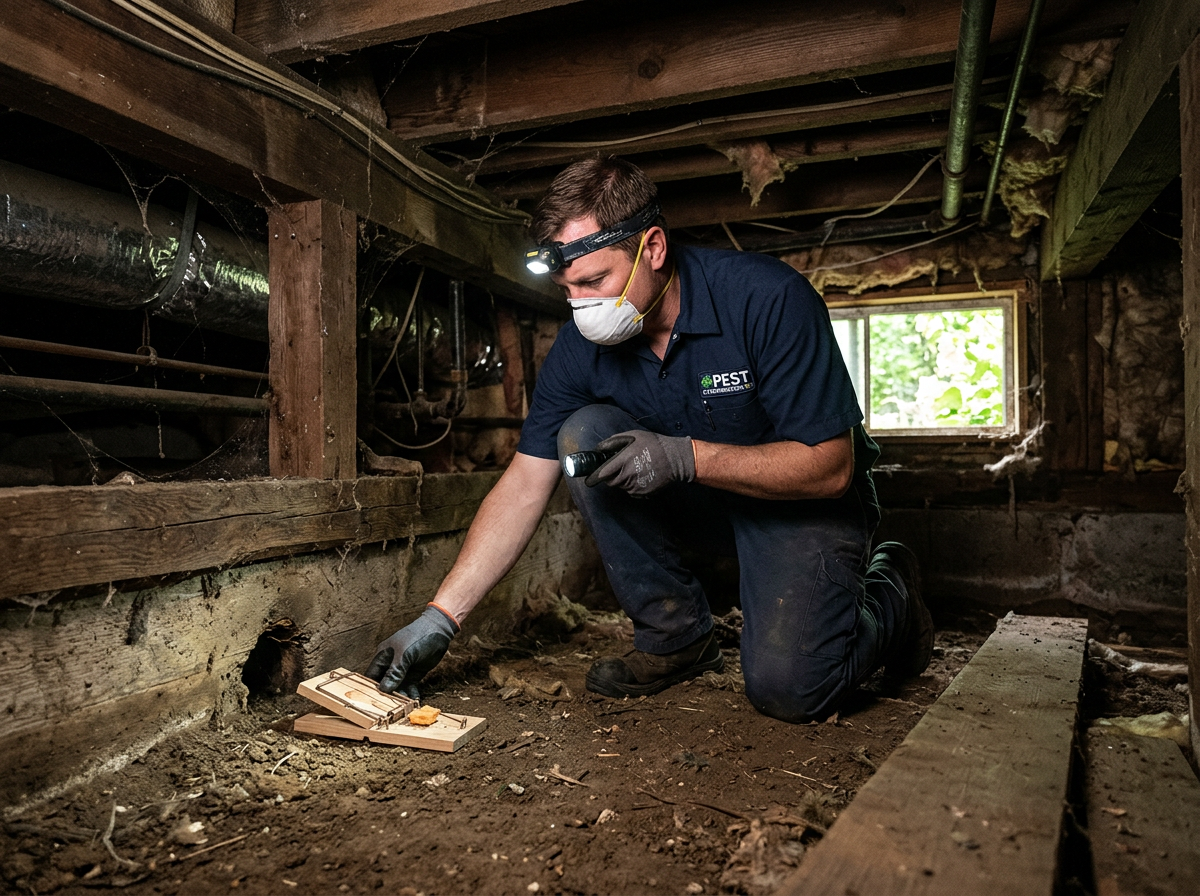
Rodent control for Thiells homes with crawl spaces starts with sealing all gaps 1/4 inch and larger around foundation walls, utility penetrations, and sill plates before any trapping occurs. This exclusion-first approach directly addresses how fieldstone and rubble foundations common in the area allow Norway rats from sewers and burrows plus house mice from wall voids to reach the underfloor space.
Crawl Space Entry Risks in Thiells Foundations
Thiells homes often sit on older fieldstone or rubble foundations that develop settling cracks and open joints over decades. These openings connect directly to soil and sewer laterals where Norway rats travel, while shared party walls in denser sections allow house mice to move between structures. Once inside the crawl space, rodents find insulation, stored items, and consistent moisture that support nesting. Autumn migration from September to November drives more activity as outdoor temperatures drop and rodents seek the heated building envelope above. Snow cover later concentrates foraging around the foundation perimeter where warmth escapes. Addressing these paths requires inspecting the entire perimeter from inside the crawl space rather than relying on exterior sightings alone.
Sealing Gaps and Vents for Long-Term Exclusion
Begin exclusion by measuring every opening around pipes, wires, and vents with a 1/4-inch template to confirm what needs blocking. Use heavy-gauge metal mesh or cement patching on larger foundation cracks and fit metal collars around utility entries that rodents cannot chew through. Crawl space vents should receive tight-fitting covers with mesh backing sized to block both mice and rats while still allowing airflow. Focus extra attention on the sill plate where the wood meets the foundation, a frequent travel route once rodents reach the space. These steps prevent new animals from entering even when neighboring properties remain active. Homeowners can verify the work by rechecking the same openings after the first hard freeze when activity typically increases.
Handling Insulation and Droppings in the Space
Rodents nesting in crawl space insulation leave droppings that must be removed to eliminate attractants and health concerns. Vacuum or bag the contaminated material rather than sweeping, then replace only after all entry points are sealed. In Thiells homes, older batt insulation often shows concentrated droppings near the warmest sections of the foundation wall where mice and rats gather. Removing this material also reduces the chance of odor issues rising into living areas above. After cleanup, install a vapor barrier if one is absent to limit future moisture that supports rodent activity. Regular visual checks from the access door help confirm no new nesting has started before problems reach the attic or wall voids.
Timing Work With Thiells Seasonal Patterns
Schedule primary exclusion work in late summer before the September to November migration period when rodents move indoors. In Thiells this timing aligns with cooling evenings that push Norway rats and house mice toward heated structures. Once snow arrives, activity concentrates around foundations where heat loss creates foraging zones, making any remaining gaps more likely to be used. Follow-up inspections after the first snow and again in early spring catch new entries created by freeze-thaw cycles. Linking exclusion to these local seasonal markers keeps the crawl space protected year-round without unnecessary repeat visits.
Connecting Crawl Space Work to Whole-House Protection
Crawl space sealing forms the base layer of protection that supports attic and wall void efforts described in related guidance on common rodent entry points in older Thiells houses. When combined with service options such as rodent control and rat removal, the approach reduces the need for repeated interventions. Homeowners who complete crawl space exclusion early also benefit from checking the when to schedule rodent control in Thiells guide for follow-up timing. This integrated sequence keeps activity from shifting upward once the lower level is secured.