
2026-09-12 ·
Common Rodent Entry Points In Older Thiells Houses
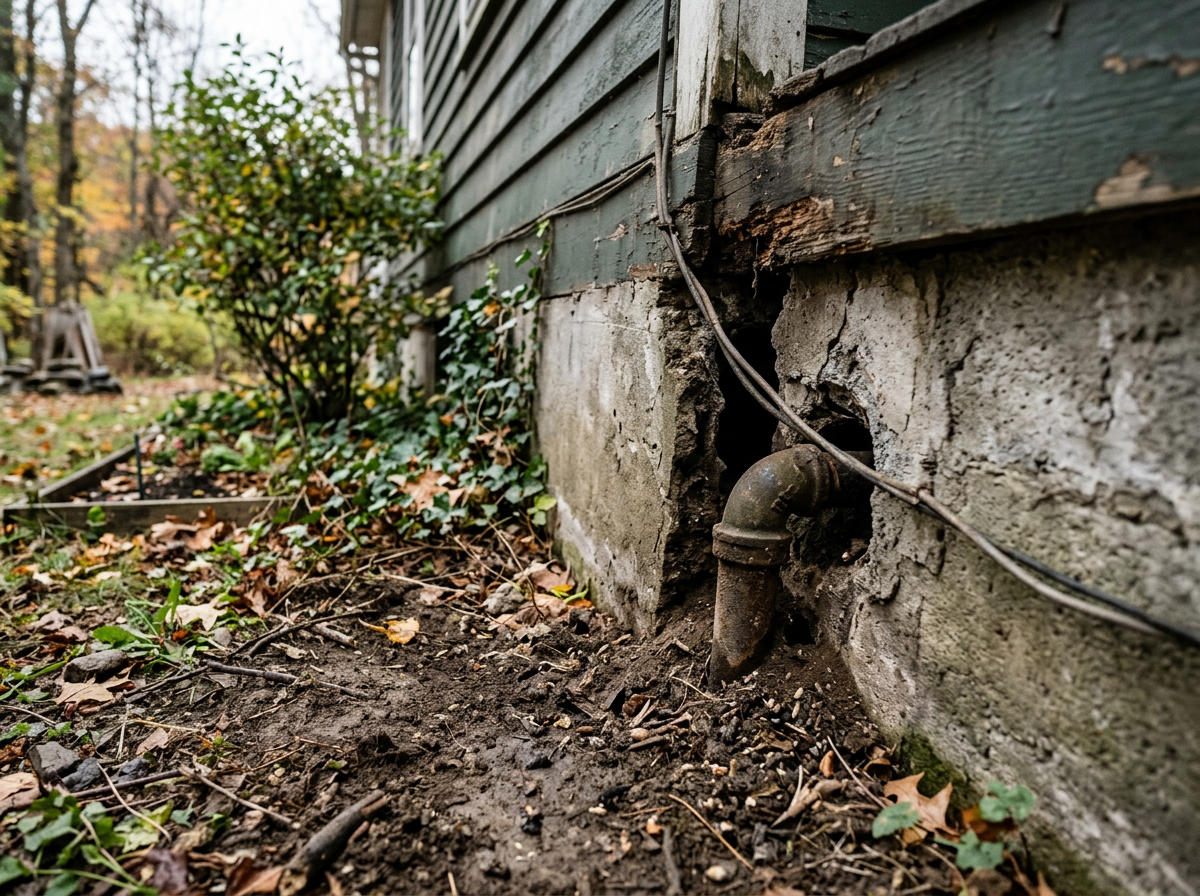
Mice enter older Thiells houses through gaps as small as 1/4 inch while Norway rats need only 1/2 inch openings. These dimensions match the physical limits of the rodents common to Rockland County properties with fieldstone foundations and rubble bases. Entry occurs most often from September through November when cooling temperatures drive indoor migration, and snow cover later concentrates activity around heated structures.
Fieldstone Foundations and Rubble Bases
Fieldstone and rubble foundations in Thiells and nearby Valley homes develop settling cracks and missing mortar joints over decades. Norway rats exploit these gaps at ground level to reach cellars and burrows beneath the structure. House mice follow suit through smaller voids around sill plates where wood meets stone. Homeowners can inspect the perimeter by clearing vegetation and checking for fresh soil disturbance or gnaw marks on wood. Once identified, steel wool packed into gaps followed by metal flashing provides durable exclusion without relying on temporary sealants. This approach aligns with exclusion-first rodent control practices used across New York properties facing similar foundation conditions.
Wall Voids and Shared Party Walls
Downstate Thiells homes often share party walls with neighboring structures, creating continuous voids that rodents travel between units. House mice and roof rats move through these spaces after entering via exterior gaps near windows or utility penetrations. Cracks around dryer vents, cable lines, and plumbing stacks widen over time and become reliable routes. Checking both interior and exterior surfaces during autumn reveals activity before winter snow concentrates rodents around heated buildings. Sealing these points with metal mesh and expanding foam rated for exterior use stops further movement. Properties near construction sites face added pressure as displaced rodents seek new shelter, making early inspection of shared walls especially useful.
Attic and Roofline Access Points
Attics in older Thiells houses attract roof rats and house mice through openings at soffits, ridge vents, and where rooflines meet chimneys. Droppings left in insulation represent a direct remediation cost because contaminated material must be removed before any new insulation can be installed. Gaps as small as 1/4 inch around vent pipes or loose flashing allow entry once temperatures drop. Inspecting the attic during daylight hours with a flashlight helps locate these points and any current nesting signs. Professional exclusion teams address these roofline vulnerabilities by installing vent covers and sealing penetrations, reducing the chance of repeated attic activity in subsequent seasons.
Sewer Laterals and Utility Entries
Cracked sewer laterals beneath Thiells streets and yards provide underground routes for Norway rats from municipal systems into cellars. Utility entries for gas, water, and electric lines often have annular spaces around pipes that rodents enlarge with gnawing. These points remain active year-round but see increased use when autumn migration begins. Homeowners should look for droppings near floor drains and check exterior cleanouts for signs of activity. Combining pipe sealing with foundation repairs limits access from below while surface exclusion handles above-grade entries. This integrated method supports ongoing rodent control efforts without seasonal gaps in protection.