
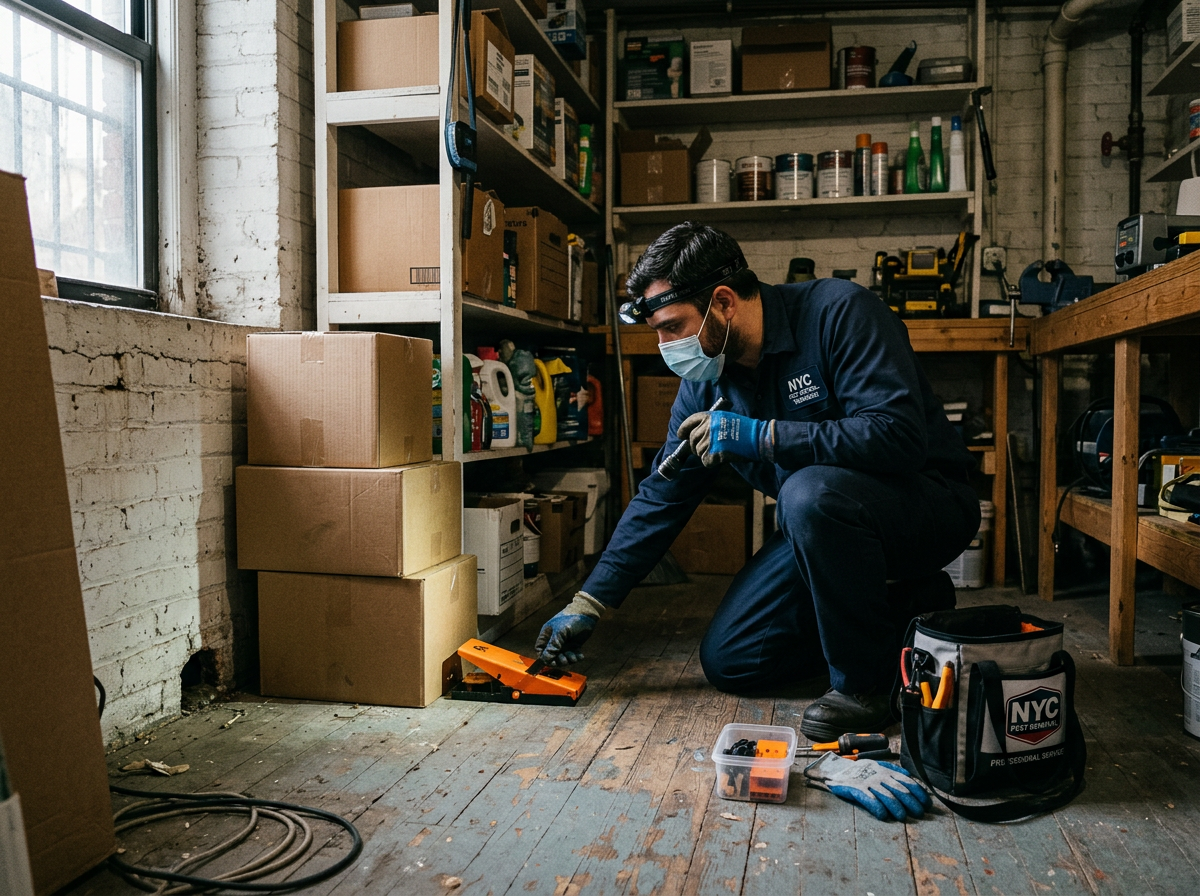
House mice need only a quarter-inch gap to enter, and in Thiells many older homes have them around fieldstone foundations, utility penetrations, and where cast-iron pipes meet the slab. Once inside they run along baseboards, through wall voids, and behind kitchen cabinets where droppings and gnaw marks accumulate out of sight. Bait stations alone often fail because new mice simply follow the same paths from the exterior.
Effective work starts with locating every active runway using tracking powder and inspection mirrors, then sealing gaps with steel wool and caulk before any trapping begins. Access panels in cabinets and soffits are sometimes required to reach nesting sites in insulation or behind drywall. Missed openings as small as a dime allow re-infestation within weeks, especially after autumn cooling drives more activity indoors.
Mice Removal Near You — Choose Your City
Every city below has its own local Mice Removal page with coverage details.
Nassau
Suffolk County
Rensselaer
Dutchess County
Monroe County
Ulster
Westchester
Suffolk
Erie County
Ontario County
Erie
Nassau County
Ulster County
Dutchess
Niagara
Saratoga
Orange
Cayuga
Wyoming
Columbia County
Allegany County
Sullivan County
Queens County
Albany County
Wayne
Rockland County
Onondaga
Rockland
Warren County
Norway rats and roof rats use larger routes, but mice exploit the narrowest cracks around door thresholds, dryer vents, and where shared party walls meet in downstate row houses. Technicians carry extendable tools to treat deep voids without unnecessary demolition. Follow-up visits confirm no new activity before final sealing is completed.
Homeowners often overlook the space under sinks and behind appliances where mice find both food crumbs and warmth from pipes. Thorough treatment includes pulling out toe-kicks and checking behind dishwashers so traps reach the actual travel routes rather than just open floor areas.
Technician insight
In Thiells the thing that catches most people out with Mice Removal is the fieldstone foundations that shift every winter; a gap that looked sealed in August opens again once frost heaves the rubble, letting new mice straight into the same wall voids we just cleared.
Thiells Split-Level With Cabinet Activity
Homeowner reported droppings behind the kitchen sink. Inspection found quarter-inch gaps around the dishwasher line and an open void under the toe-kick. Steel wool and caulk sealed the entries, traps were set along the baseboard run, and a follow-up visit two weeks later confirmed no new signs.
Mice Removal Services We Offer
✓Wall Void Mouse Treatment
Technicians locate and treat active runs inside wall cavities using tracking tools and targeted traps without full demolition.
✓Kitchen and Cabinet Mouse Control
Focuses on the narrow gaps behind cabinets and under appliances where mice nest and travel in search of crumbs and warmth.
✓Garage and Basement Exclusion
Seals quarter-inch openings around garage doors, foundation cracks, and utility entries that allow mice to move from outdoors into heated spaces.
✓Interior Trapping Program
Places and monitors multiple trap types along established runways inside the home until activity ceases.
✓Follow-Up Verification Visit
Returns after initial work to confirm no new signs and to close any gaps discovered during the first round of trapping.
How it works
- 1
Detailed Inspection
Technician examines foundation, utility entries, cabinets and voids using mirrors and tracking powder to map every active runway.
- 2
Entry Point Sealing
All quarter-inch gaps are packed with steel wool and sealed before trapping begins so new mice cannot follow the same paths.
- 3
Targeted Trapping
Multiple trap types are placed along confirmed routes inside voids and behind cabinets; stations are checked on schedule.
- 4
Verification and Final Seal
Follow-up visit confirms zero activity then any remaining access points are permanently closed.
Pricing
Scope depends on the number of active voids, cabinet access needs, and extent of foundation gaps found during inspection; call to schedule.