
2026-09-12 ·
Rodent Control In Thiells During Winter Months
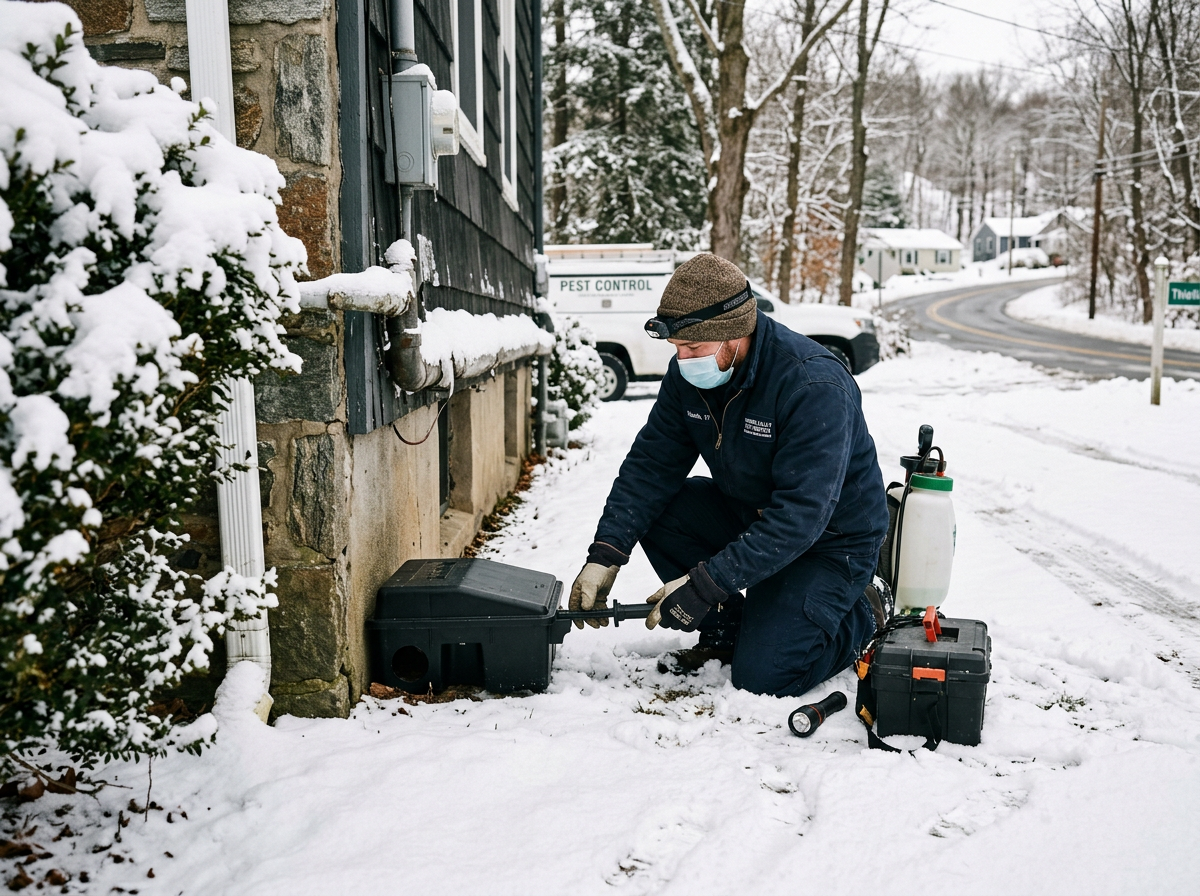
Rodent control in Thiells during winter months centers on sealing entry points before snow arrives, since rodents move indoors once outdoor temperatures drop below 40 degrees and snow blankets the ground from December into March.
Winter Behavior Changes for Local Rodents
Norway rats shift from sewers, cellars and burrows into heated spaces once snow limits outdoor foraging. House mice and roof rats follow the same pattern, traveling along wall voids and attics where warmth and food remain available. In Thiells, fieldstone and rubble foundations common in the Valley create multiple gaps that allow mice to pass through openings as small as one-quarter inch. Shared party walls in denser neighborhoods add hidden routes that become active routes once outdoor activity slows. Snow cover further concentrates rodents around building perimeters where heat leaks keep ground clear. This seasonal shift makes December through February the period when droppings in attic insulation become a frequent discovery for homeowners.
Exclusion Steps That Work in Cold Weather
Effective exclusion starts with a full inspection of the foundation, roofline and utility penetrations before heavy snow falls. Gaps around pipes, vents and sill plates receive steel wool backed by caulk or metal flashing sized to block both rats and mice. Cracked sewer laterals near older Thiells homes often need repair because they serve as direct indoor routes once rodents follow warm air upward. Attic access points receive particular attention since insulation contaminated by droppings requires removal and replacement after entry is stopped. Rodent control teams in the area prioritize these permanent barriers over seasonal trapping because exclusion addresses the root access routes created by local construction types.
Recognizing Activity During Snow Cover
Homeowners notice fresh droppings near baseboards, insulation disturbed in attics, and gnaw marks on stored items once rodents settle indoors. Norway rats leave larger droppings along cellar walls while house mice scatter smaller ones throughout living spaces. Early detection prevents litters from forming inside wall voids, where a single pair can produce multiple offspring within weeks. Identifying Norway rats versus house mice in Thiells helps residents match signs to the correct species so control methods target the right areas. Snow tracks around heated foundations also reveal repeated travel paths that point back to entry holes still open after the first freeze.
Professional Support for Persistent Cases
When droppings continue to appear after basic sealing, targeted follow-up inside attics and wall voids becomes necessary. Attic rodent removal addresses insulation damage and hidden nesting sites that form once rodents reach upper levels. Rockland County homes often face added variables such as shared walls and older utility lines that require coordinated work across multiple access points. Cost factors for rodent control in Rockland County outline how the extent of entry sealing and insulation replacement influence the scope of each project. The team at 20 Squadron Blvd #327, New City, NY 10956 remains available for inspections that confirm whether current barriers are holding through the remaining winter months.