
2026-09-12 ·
Rodent Control Challenges In Thiells Rental Properties
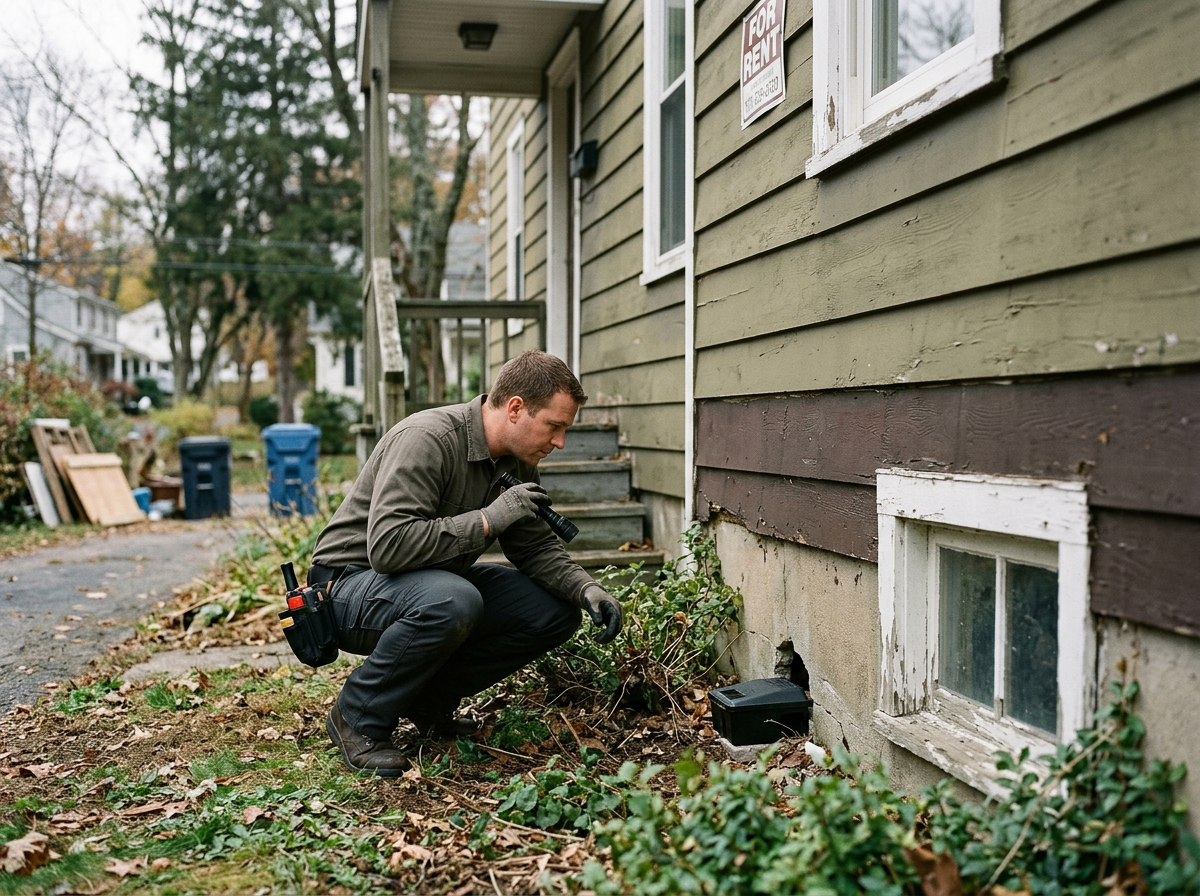
Rental properties in Thiells encounter rodent control challenges primarily from fieldstone foundations with gaps as small as 1/4 inch that allow house mice entry and 1/2 inch openings that admit Norway rats, combined with shared party walls that let rodents move between units undetected. These structural realities, along with cracked sewer laterals common in the area, create persistent access points that exclusion-first methods must address before populations establish in cellars, wall voids, or attics.
Foundation and Structural Vulnerabilities
Thiells rentals often sit on rubble or fieldstone foundations that settle over time and create entry points for both Norway rats in burrows and house mice seeking wall voids. Cracked sewer laterals add underground routes that concentrate activity around heated buildings once snow cover arrives. Property managers must inspect these bases thoroughly because rodents exploit the same gaps year after year. Effective exclusion begins with sealing these openings using materials rodents cannot chew through, followed by monitoring to confirm no new access forms. Without this step, attic insulation quickly becomes contaminated with droppings that require full removal and replacement. Rodent Control Co focuses on these site-specific details when working on rental stock throughout the Thiells area.
Shared Walls and Multi-Unit Spread
Party walls in Thiells multi-family buildings allow house mice and roof rats to travel between apartments without surfacing in common areas, making single-unit treatments insufficient. Rodents use these routes to reach multiple kitchens and bathrooms, increasing the chance that one untreated space re-infests neighbors. Exclusion work therefore requires coordination across units to block vertical and horizontal travel paths at once. Technicians map activity along these walls before installing barriers, because partial sealing simply redirects the problem. This coordinated approach prevents repeated service calls that strain rental maintenance budgets and tenant relations.
Seasonal Migration and Weather Influences
From September through November, cooling temperatures trigger Norway rats and house mice to migrate indoors in Thiells, concentrating around foundations and utility entries of rental buildings. Snow cover later in winter further funnels activity toward any heated structure, raising the risk that attic spaces become long-term harborages. Litter sizes of 6 to 12 young and lifespans reaching 12 months indoors mean populations can expand rapidly once entry occurs. Tracking rodent trails around Thiells foundations helps identify these seasonal pressure points early so exclusion can be completed before migration peaks. Tracking Rodent Trails Around Thiells Foundations outlines practical inspection steps for property managers facing this annual pattern.
Attic and Insulation Remediation Needs
Once rodents reach attics in Thiells rentals, droppings embedded in insulation create a secondary remediation cost that compounds the initial control effort. House mice and roof rats nest in these spaces and contaminate material that must be removed before new insulation can be installed. Attic rodent removal therefore pairs exclusion sealing with targeted cleanup to restore habitability for tenants. Attic Rodent Removal details the sequence used to handle these cases without disrupting other units. Checking properties after storms further reveals new entry points created by wind or water damage that accelerate winter activity. How To Check For Mice After A Thiells Storm provides a checklist tailored to local rental construction.