
2026-09-12 ·
Tracking Rodent Trails Around Thiells Foundations
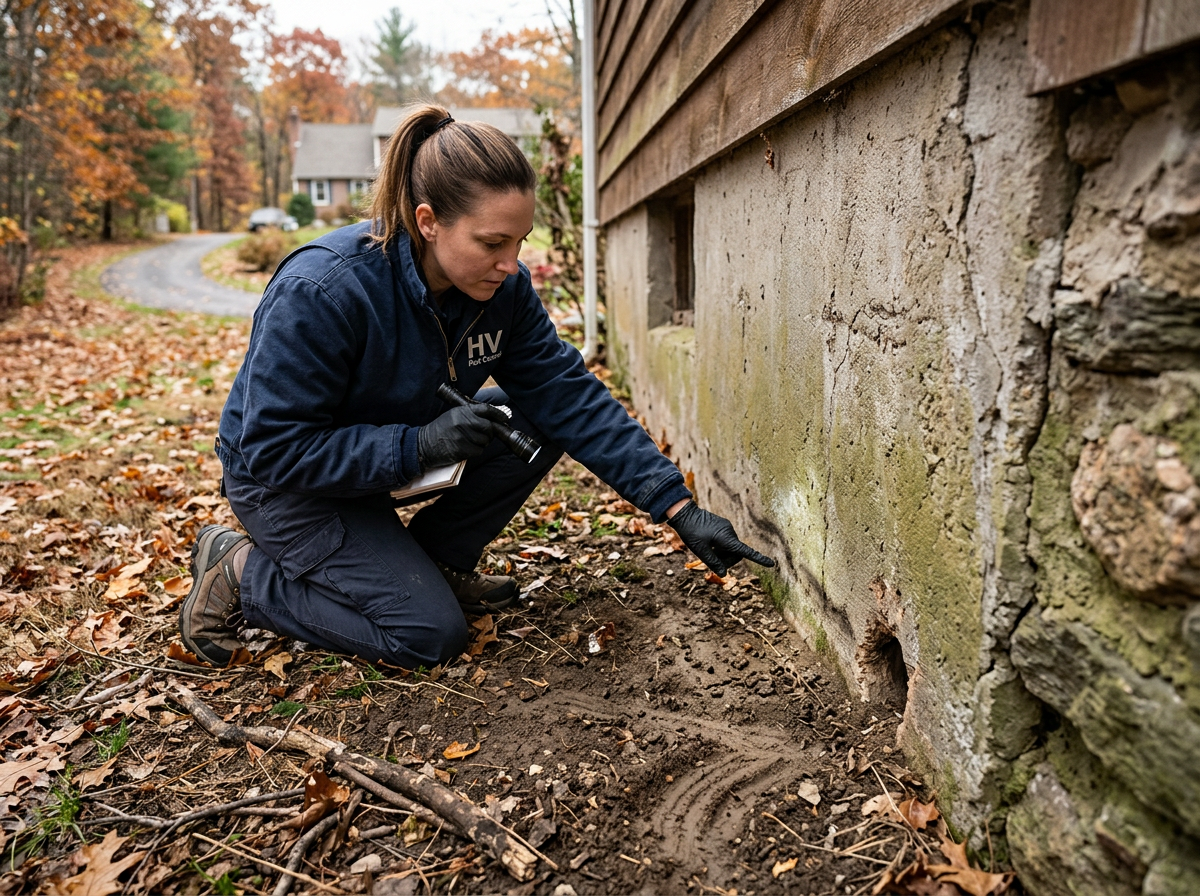
Mice pass through gaps as small as 1/4 inch while Norway rats need about 1/2 inch, so start by examining the base of fieldstone and rubble foundations in Thiells for these exact openings where soil meets the wall. House mice favor wall voids and attics while Norway rats use cellars, sewers, and burrows, leaving distinct trails that widen with repeated use. Shared party walls downstate and cracked sewer laterals create additional routes that concentrate activity around buildings once snow cover arrives.
Spotting Entry Gaps in Local Rubble Walls
Fieldstone foundations common in the Valley and around Thiells develop natural cracks and voids that rodents exploit year after year. Walk the perimeter after leaf fall and look for smoothed soil or worn edges at ground level where repeated passage has occurred. Pay attention to areas near downspouts or utility penetrations where moisture softens mortar and creates easier access points. These gaps often align with interior signs such as droppings along baseboards or in attic insulation that must be removed during later remediation.
Following Droppings and Gnaw Evidence
Fresh droppings near foundation cracks indicate active trails, with Norway rat scat larger and more capsule-shaped than the smaller pointed pellets left by house mice. Check both sides of the wall during daylight hours when activity is lower, noting any gnawed wood or insulation fibers pulled outward. In Thiells, autumn migration from September to November drives rodents indoors, so trails become more visible as they seek warmth before snow concentrates movement around heated basements. Identifying Norway Rats Versus House Mice In Thiells helps distinguish the species by these signs.
Seasonal Shifts from September Onward
Once daytime temperatures fall below 50 degrees, rodents shift from outdoor burrows to foundation perimeters and interior voids. Snow cover further funnels activity to the warmest building edges, creating predictable trail patterns along south and east exposures. Inspect during calm weather when tracks remain visible in soft soil or light dust. This timing aligns with peak indoor entry in Rockland County homes where fieldstone construction provides multiple routes.
Practical Steps for Mapping Trails
Begin at the exterior foundation line and mark each gap with tape or chalk, then move inside to match those locations with interior evidence. Use a flashlight at floor level to spot grease marks along baseboards that confirm repeated travel routes. Record findings on a simple diagram before any exclusion work begins. Rodent Control After Construction In Rockland County covers how new builds can create similar vulnerabilities in Thiells.
Connecting Exterior Trails to Interior Spaces
Trails that start at foundation gaps often continue through shared walls or up into attics where insulation holds droppings and nesting material. Check crawl spaces and cellar corners for burrow openings that connect directly to exterior soil. Once mapped, these routes guide targeted sealing that prevents further migration without disturbing unrelated areas of the property.