
2026-09-12 ·
Signs Of Roof Rats In Thiells Attics
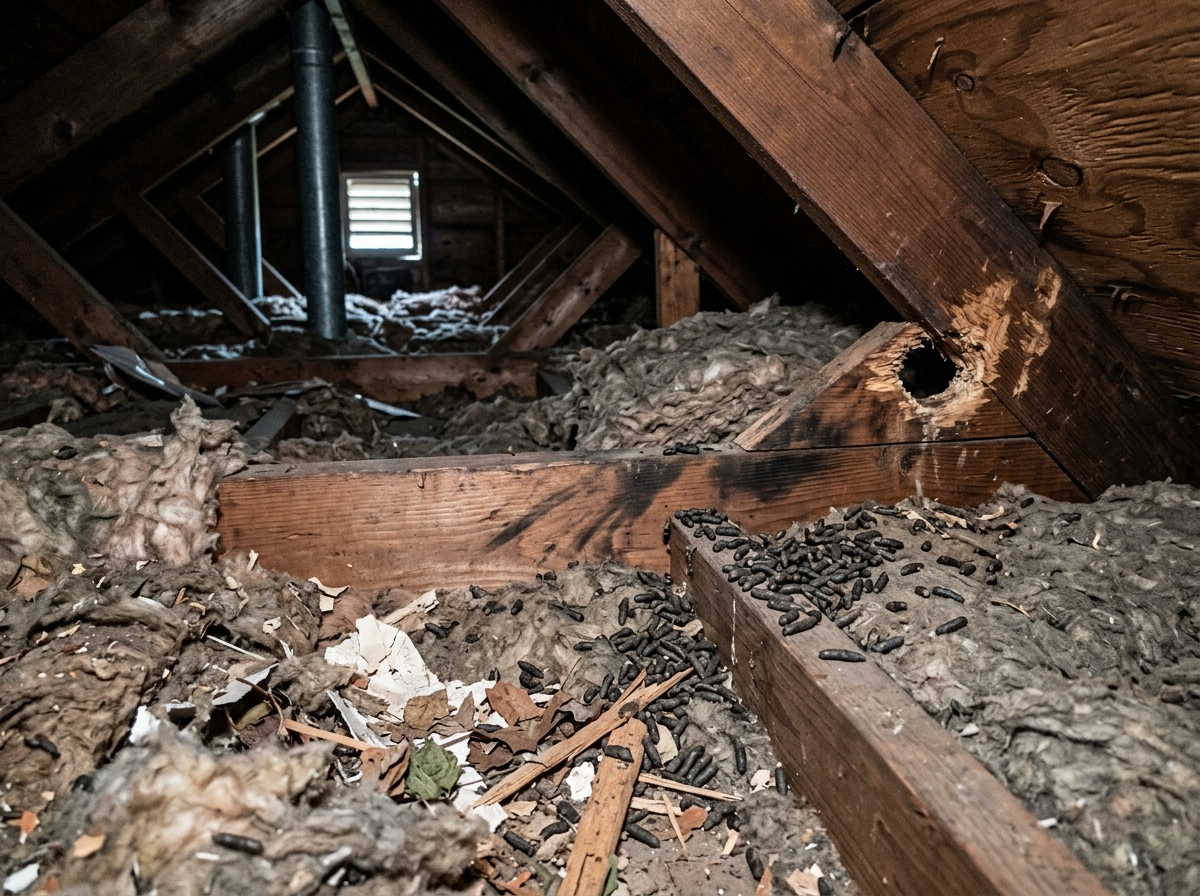
Roof rats in Thiells attics produce 40 to 50 droppings per day per rat, with each dropping measuring about 1/2 inch long and pointed at both ends. These pellets often appear in clusters near entry points or along rafters where the rats travel repeatedly. Homeowners also find shredded insulation and gnawed wood edges concentrated in the upper levels of homes built with fieldstone foundations.
Droppings and Urine Evidence
Roof rat droppings stand out from house mouse pellets because of their larger size and the way they scatter along travel paths in attics. In Thiells homes, these droppings frequently mix with urine stains that darken attic insulation over time, creating a real remediation cost when the material must be replaced. The stains often follow straight lines between wall voids and roof peaks, reflecting the rats' preference for elevated runs rather than ground-level burrows. Checking insulation near gable vents and soffits after the first cold snap reveals these patterns before populations grow further into winter.
Gnaw Marks and Nesting Signs
Roof rats chew openings as small as 1/2 inch to access attics, leaving clean, beveled edges on wood beams and wiring sheathing. In older Thiells houses, these marks appear around pipe penetrations and where roof sheathing meets exterior walls. Nesting material consists of shredded fiberglass or cellulose insulation pulled into loose piles in corners or behind collar ties. Residents may also notice small pieces of paper or fabric carried in from lower levels through shared party walls common in the area.
Seasonal Activity Patterns
Activity increases sharply in Thiells from September to November as roof rats migrate indoors ahead of dropping temperatures and eventual snow cover. During this period, the rats concentrate around heated buildings, using wall voids and attics for shelter. By mid-winter, tracks in dust or insulation show repeated movement between entry holes and food sources, with litters of 6 to 8 pups born in hidden nests. This timeline aligns with the natural cycle of Norway rats staying in sewers and cellars while roof rats claim the higher spaces.
Entry Points Common in Thiells
Fieldstone and rubble foundations in Thiells create gaps that roof rats exploit to reach attics through wall voids. Cracked sewer laterals and loose flashing around chimneys provide additional routes that become active once autumn cools the air. Homeowners can trace these paths by following droppings from the attic down to exterior walls. Common rodent entry points in older Thiells houses details the specific construction details that allow this access in local homes.
Inspection and Next Steps
A systematic check of the attic during daylight hours reveals the extent of roof rat presence through the combination of droppings, chew marks, and disturbed insulation. Focus on areas above kitchens and bathrooms where pipes create travel routes. Attic rodent removal addresses the specific needs of sealing these elevated spaces while rodent control covers the broader exclusion work required around the foundation and roofline. Early identification prevents further damage to wiring and insulation before spring activity resumes.
Address any findings promptly by documenting locations of droppings and damage for targeted follow-up. The combination of these visible signs confirms roof rat activity distinct from other rodents that favor lower levels in Thiells homes.